
Over its 19-year history, one of the RC44 class’ longest partners is Calero Marinas. The company started by patriarch Jose Calero in 1983 now operates four marinas across the Canary Islands, one in the most westerly of the Spanish island group, Santa Cruz de la Palma, the most recently-opened - Marina Jandía in the south of Fuerteventura. Then there are two in the Calero’s home island of Lanzarote: the most easterly of the Canaries, Marina Lanzarote in the capital Arrecife and their original marina, Puerto Calero towards the south of island. While there are government and other privately-owned marinas in the Canary Islands, Calero Marinas is the largely privately-operated marina group here.
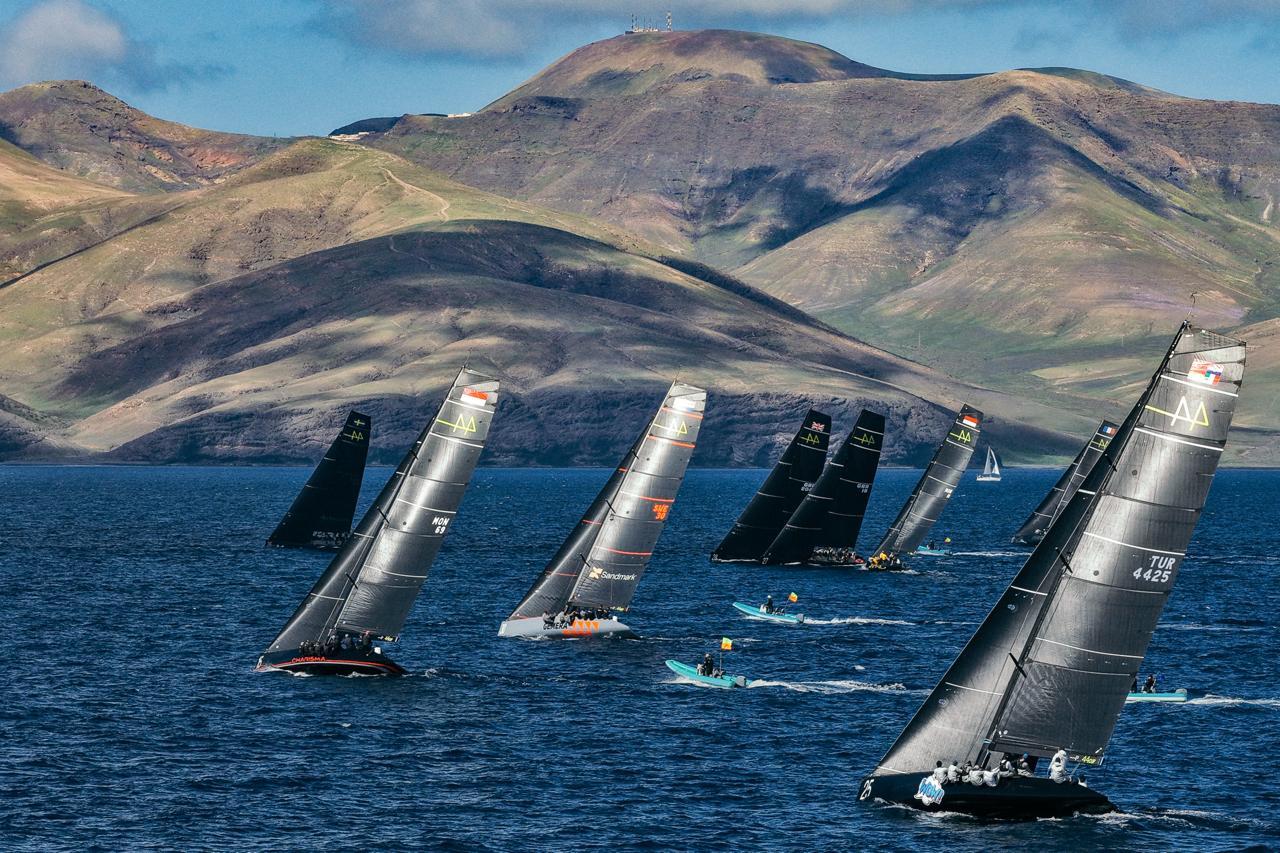
The 44Cup had an enjoyable conclusion to its 2025 season in Marina Jandía but for the opening event of 2026, the high performance owner-driver class has returned to Puerto Calero. The RC44s first raced out of here back in 2008 in the 44Cup’s heyday and this will be the 11th time they have returned (and the 14th to the Canary Islands - having raced out of the Marina Lanzarote in both 2017 and 2018).
While the majority of marina operators across the globe rely principally on their berth holders being a relatively static group, the marinas in the Canary Islands find that their customers are often a more transitory group. There is the famous old piece of seafaring wisdom for ships crossing the Atlantic that you “go south until the butter melts” before turning your bow west to head for the Caribbean. The Canary Islands is typically where the butter melts and for centuries have been regularly used as a last stopping off point before the lengthy journey ‘across the pond’. Today Marina Lanzarote for example is the start port for the Royal Ocean Racing Club’s Transatlantic Race to Antigua that sets sail every January and Calero Marinas has regularly in the past hosted the biennial Mini Transat.
The Calero marinas in Lanzarote cater for regular boats but also the largest – the giant 111ft semi-foiler Raven, the line honours winner of the 2026 RORC Transatlantic Race, has made Marina Lanzarote her principal training base since her launch in 2023, while opposite from where the 44Cup fleet is currently moored in Puerto Calero is the giant 44.3m yacht Scavenger as well as the 58m expedition yacht Sea Wolf.
“Annually we receive thousands of yachts sailing to the Caribbean,” says
José Juan Calero, CEO of Calero Marinas. “But the other thing which is more important for us is that we are the southern shore of Europe. So our clients can leave their boats with us in a European area and in a very nice climate where they can enjoy their sailing year round. Plus we have very good connections with European capital cities via 156+ connections and direct flights. So our clients leave their boats here and can come down for a weekend.”
Of course the Calero family has a vested interest in the 44Cup coming to Lanzarote having been a competitor on it for many years and having many friends in the class. But hosting sailing events in their marinas is highly valuable both for their own business as well as to tourism in the Canary Islands. “If they enjoy an event, they experience the destination and then they repeat it,” says JJ Calero of the 44Cup owners and crew.
Aside from Raven, other offshore race teams have used the Canary Islands as a training base. This has included several teams taking part in the French non-stop singlehanded round the world race, the Vendée Globe and several Volvo Ocean Race-winning teams, including Ericsson and Groupama. The all-female Team SCA also based themselves out of what is today the ‘tech’ area for the 44Cup.

“The events, from our point of view, are the best way to create exposure all over the world. To relate our brand, not only the Calero Marinas brand, but the Canary Islands and Lanzarote brand, with the top-level events and top-level tourism,” continues JJ Calero. “That's very important. Also the events create the platform for all these very interesting segments and clients to try our destination: They visit us, come back and we develop a very interesting relation long-term with them.”
The Canary Islands are especially known for their strong northwesterly trade winds. These have made them a favourite originally with windsurfers now with other sorts of board sailing as well as dinghies, in addition to yachts. This week for example being hosted nearby is the Lanzarote International Regatta for the ILCA 6 and 7 (Laser) and 49er and Snipe classes and set to be followed immediately after by the Lanzarote iQFOiL Games.
“Lanzarote is the destination for open-air sea sports,” JJ Calero concludes. “We have good wind, good waves. We also have very good routes for cycling and a lot of people come to train for Ironman events in Lanzarote.”